Most people shopping for a deck builder in Waukegan are comparing three or four quotes that all say roughly the same thing on paper. Same square footage, similar price, all promising a nice deck. What separates them isn't on the quote. It's in the footings, the fasteners, and whether the guy pulls a permit. Here's what actually matters.
Footing depth matters more here than it does in most places
Lake County sits on a lot of heavy clay. Clay holds water, and when that water freezes it expands, which pushes anything sitting on top of it upward. That's frost heave, and it's the reason a deck post that's set too shallow will lift an inch or two every winter and settle back down every spring, cracking your stairs and racking your railings in the process. Local frost depth around Waukegan runs to about 42 inches, and footings need to go below that, resting on undisturbed soil, not on backfill. A builder who tells you 18 inches is fine, or who eyeballs it instead of digging to grade, is setting you up for a deck that moves every year until it doesn't come back down straight.Permits aren't optional, and a good builder won't ask you to skip one
Waukegan requires a permit for most deck work that involves a new structure or a change to footings, and the inspector will want to see the footing holes before you pour, and the framing before it gets decked over. If you're outside city limits, Lake County handles it instead. Either way, a licensed contractor pulls it themselves and builds the inspection dates into the schedule. If a builder offers to skip the permit to save time or money, that's not a favor. It means no one is checking his footing depth, his ledger attachment, or his railing height, and if something fails later, your homeowner's insurance can use the lack of a permit against you. Walk away from anyone who suggests it.The ledger board is where decks actually fail
Most deck collapses you hear about aren't the boards. It's the ledger, the board bolted to the house that the whole structure hangs off of. It has to be lag-bolted or through-bolted into the house framing, not just nailed, and it needs flashing above it so water running down the siding doesn't get behind the board and rot the house framing from the inside. That rot can go on for years without anyone noticing until the deck pulls away from the house. Ask whoever quotes you how they're flashing the ledger. If they don't have a clear answer, that tells you something.Material choice changes the maintenance conversation, not just the price
Pressure-treated pine is still the most common decking around here because it's cheaper up front, but it needs staining or sealing every two to three years, especially with the humidity we get in July and August, or the wood checks and the fasteners start to show. Composite decking costs more but doesn't need that upkeep, and it handles our freeze-thaw cycles without splitting the way wood sometimes does. Neither one is the wrong answer. What's wrong is a builder who doesn't ask which one you want before quoting, or who quotes composite prices and installs pressure-treated to pocket the difference. Check the invoice against what actually shows up on the truck.Railings and stairs aren't decoration, they're code
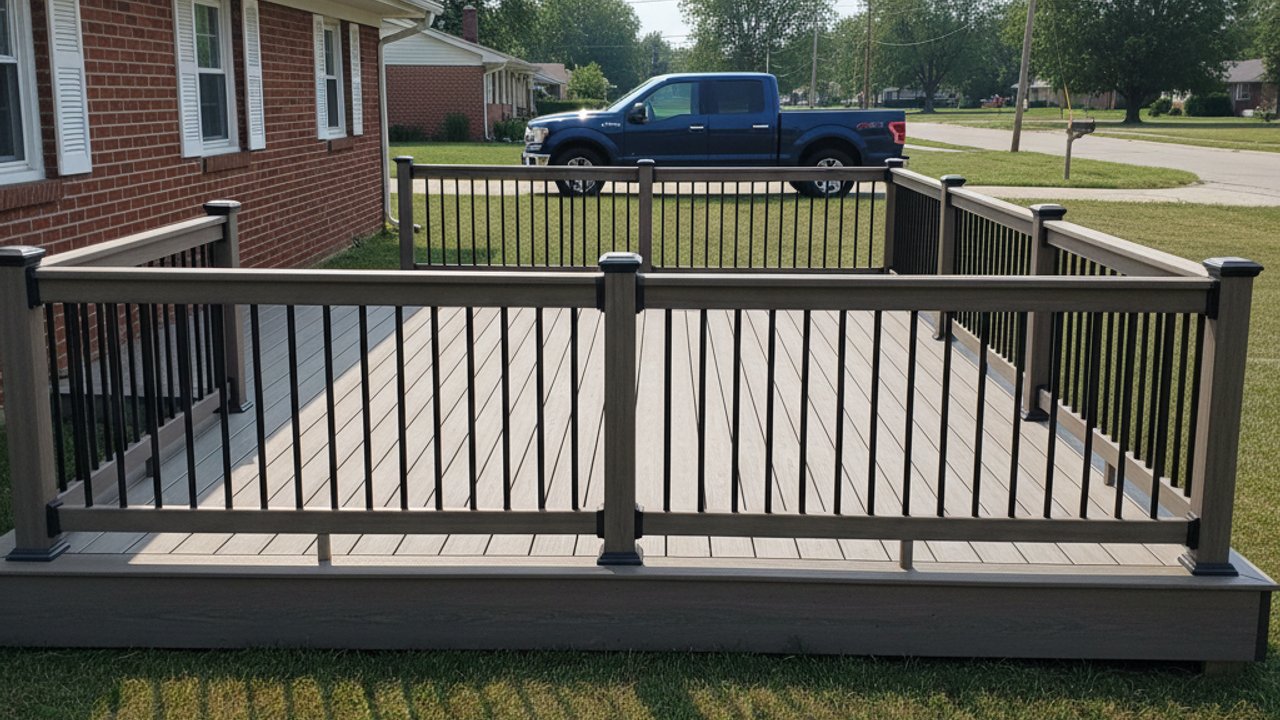
Illinois follows the residential code that requires guardrails on any deck surface more than 30 inches above grade, and those rails need to be at least 36 inches high with balusters spaced so a 4-inch sphere can't pass through them. That number exists because of kids, not because an inspector likes round figures. A builder who's sloppy about spacing on the railing is usually sloppy about the parts you can't see either, the joist hangers, the blocking, the post-to-beam connections.What to actually ask before you sign anything
- Are you pulling the permit, or is that on me?
- How deep are the footings going, and how do you know that's below frost line on this lot?
- What are you using to flash the ledger board?
- Are you insured for the work, and can I see proof?
- What's the manufacturer's warranty on the decking material, separate from your labor warranty?
A builder who answers these without hesitating has done this before. A builder who gets vague or annoyed is telling you something too.
Neighborhood age changes what's already in the ground
If you're near downtown Waukegan or one of the older blocks close to the lake, the house was likely built well before decks were standard, so there's no existing structure to tie into and often no record of what's buried near the foundation, old cisterns, coal chutes, that kind of thing. In the newer subdivisions out toward Gurnee or Grayslake, lots are more uniform and the soil's usually been graded more recently, but setbacks from the property line matter more because those lots tend to be tighter and HOAs are more common out that way. Either situation is workable. What matters is whether the builder checks a plat or asks about setbacks before digging, instead of finding out from a stop-work notice.None of this is complicated once you know what to listen for. It's the difference between a deck that's still solid in fifteen years and one that starts wobbling in three. If you want someone to walk your specific lot and tell you straight what it needs, that's the kind of work we do at Pacific Deck Solutions.